
Starting kindergarten is a meaningful transition for children and families in Greensboro, North Carolina. Preparation does not mean turning home into a classroom or expecting a child to master first-grade work early. It means helping them gain confidence with communication, routines, movement, play, and everyday independence. A quality preschool experience can be one setting where children practice these skills alongside peers, but families can reinforce them in simple ways at home.
Every child develops on an individual timetable. One child may be eager to recognize letters but still need support with waiting for a turn. Another may be comfortable joining a group yet need more opportunities to hold crayons or use scissors. Viewing readiness as a collection of developing skills gives families a more useful and less stressful picture.
Greensboro families can build school-ready habits during ordinary moments, including breakfast before a busy morning, a walk through the neighborhood, a visit to a library, or playtime in the backyard. Brief, repeated practice is usually more meaningful for young children than long lessons or worksheets.
Kindergarten readiness also includes the ability to recover when faced with difficulty. Children benefit when adults notice effort, describe progress, and let them try again with support rather than immediately stepping in to solve every problem.
As children grow, early learning should connect skills rather than treat them as isolated tasks. A broader view of academics can include curiosity, communication, problem-solving, and the routines that help children participate in a learning community.
What School Readiness Really Means
School readiness is a blend of learning, communication, self-care, physical coordination, and social development. Children do not need to read fluently, write neatly, or complete advanced math before kindergarten. They do benefit from being able to listen for short periods, communicate basic needs, follow simple directions, and participate in familiar routines. For example, a child who knows many letter names may still be building the equally important skill of taking turns during a group activity.
Early Literacy Skills to Encourage
Early literacy begins with language and positive experiences around books. Reading picture books together, asking what a child notices in an illustration, and inviting them to retell part of a story all strengthen listening and speaking. Children can also notice print on grocery lists, street signs, food packages, and labels around the home.
Try playful activities such as rhyming words, finding objects that begin with the same sound, drawing a picture and dictating a story, or singing familiar songs. Age-appropriate learning respects children’s interests, backgrounds, and current abilities, an approach reflected in developmentally appropriate early-childhood practice.
Early Math Skills Children Can Practice
Young children build early math understanding through hands-on comparison and exploration. Count apple slices at snack time, sort socks by color, identify circles and rectangles around the house, or ask which container holds more water. Simple patterns with blocks, spoons, or claps can introduce the idea that items can repeat in an order. Short games help children connect math to real life without making it feel like a test.
Social and Emotional Skills
Classrooms ask children to share attention, wait briefly, express needs, and manage disappointments with adult help. Families can practice these skills by naming feelings: “You seem frustrated that the tower fell.” Then offer a manageable next step, such as taking a breath, asking for help, or rebuilding together.
Children also learn through gradual social experiences. A child may begin with parallel play near another child, then move toward sharing materials and creating a game together. Predictable routines and clear expectations help make these interactions easier to navigate.
Fine-Motor and Self-Care Skills
Fine-motor practice supports many classroom activities. Drawing, coloring, squeezing play dough, stacking blocks, tearing paper, and using child-safe scissors all give hands and fingers useful practice. Gross-motor opportunities matter too. Jumping, balancing, climbing safely, dancing, and playing outside help children understand how to move their bodies in different spaces.
Self-care skills can make a new school day feel more manageable. Practice:
- Washing and drying hands
- Opening a lunch container or snack wrapper
- Putting toys and personal items away
- Using the restroom with growing independence
- Putting on a coat, backpack, or simple fasteners
Why Play Still Matters
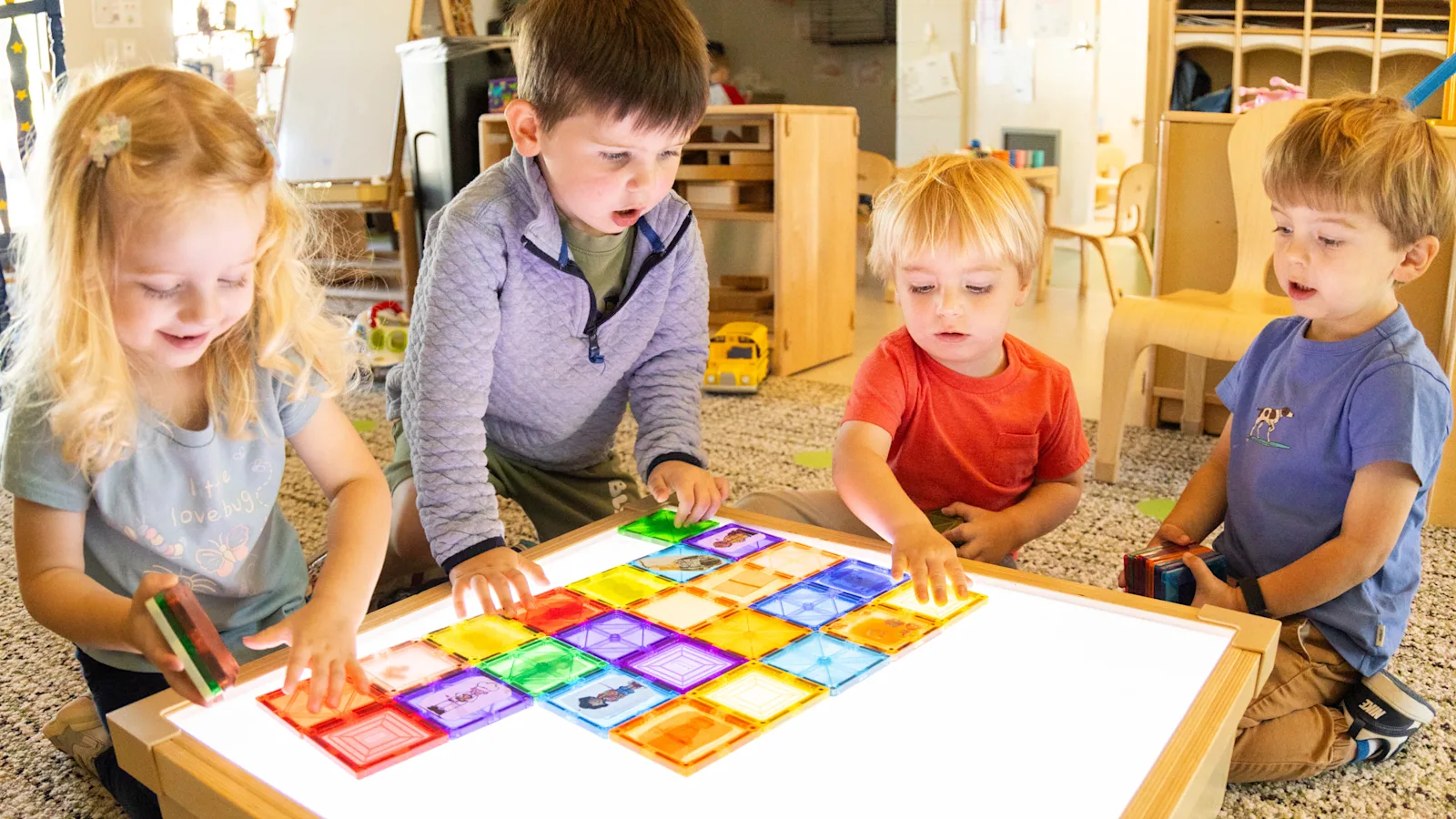
Play is serious learning for young children. Pretend play encourages language, imagination, planning, and flexible thinking. Building with blocks can involve balancing pieces, comparing sizes, creating designs, and working through disagreements with a play partner. Outdoor time also gives children room to run, climb, observe nature, and build physical confidence.
Families do not need to create a complicated activity schedule. The Centers for Disease Control and Prevention notes that playing, singing, reading, and talking with family are important parts of healthy child development, alongside routines such as sleep, nutrition, and physical activity.
Simple Home Routines That Build Confidence
- Keep bedtime and morning steps reasonably consistent.
- Give children small responsibilities, such as placing napkins on the table.
- Read together for 10 to 15 minutes when possible.
- Offer one- or two-step directions, then allow time to respond.
- Practice brief, positive separations with trusted caregivers or small groups.
- Talk through what a school day might include, such as arrival, snack, play, cleanup, and pickup.
- Praise persistence, patience, and problem-solving, not only correct answers.
A Practical Preschool Readiness Checklist
This checklist is a guide, not a test. A child does not need to check every box before beginning school.
- Listens to a short story or activity with support
- Communicates basic needs, questions, or feelings
- Follows simple directions
- Takes turns with adult guidance
- Shows interest in some letters, sounds, numbers, shapes, or patterns
- Holds a crayon and attempts marks or drawings
- Manages a few personal-care tasks
- Recovers from small setbacks with caring adult support
Common Questions From Families
Should a Child Know How to Read Before Kindergarten?
Fluent reading is not a universal kindergarten requirement. Interest in books, listening comprehension, conversation, vocabulary, and awareness of sounds are valuable starting points.
How Much Should a Child Practice at Home?
Short, regular activities fit naturally into meals, errands, bath time, playtime, and bedtime. A relaxed routine is generally more sustainable than long study sessions.
What If a Child Is Shy in Group Settings?
Small, low-pressure experiences can help. Consider a playdate, story time, playground visit, or another brief group activity where the child can observe before joining.
When Should Families Ask for Extra Support?
Talk with a pediatrician, teacher, or early-childhood specialist about ongoing concerns involving speech, hearing, movement, behavior, communication, or missed developmental skills. Seeking guidance is a practical way to understand a child’s needs and identify helpful next steps.
For Greensboro families, the most valuable kindergarten preparation is built through warm relationships, playful learning, healthy routines, and steadily increasing independence. Children are better prepared when they have frequent chances to talk, move, connect with others, solve small problems, and enjoy learning.